
text, photos: darius gondor
illustrations: xiuxiu chen


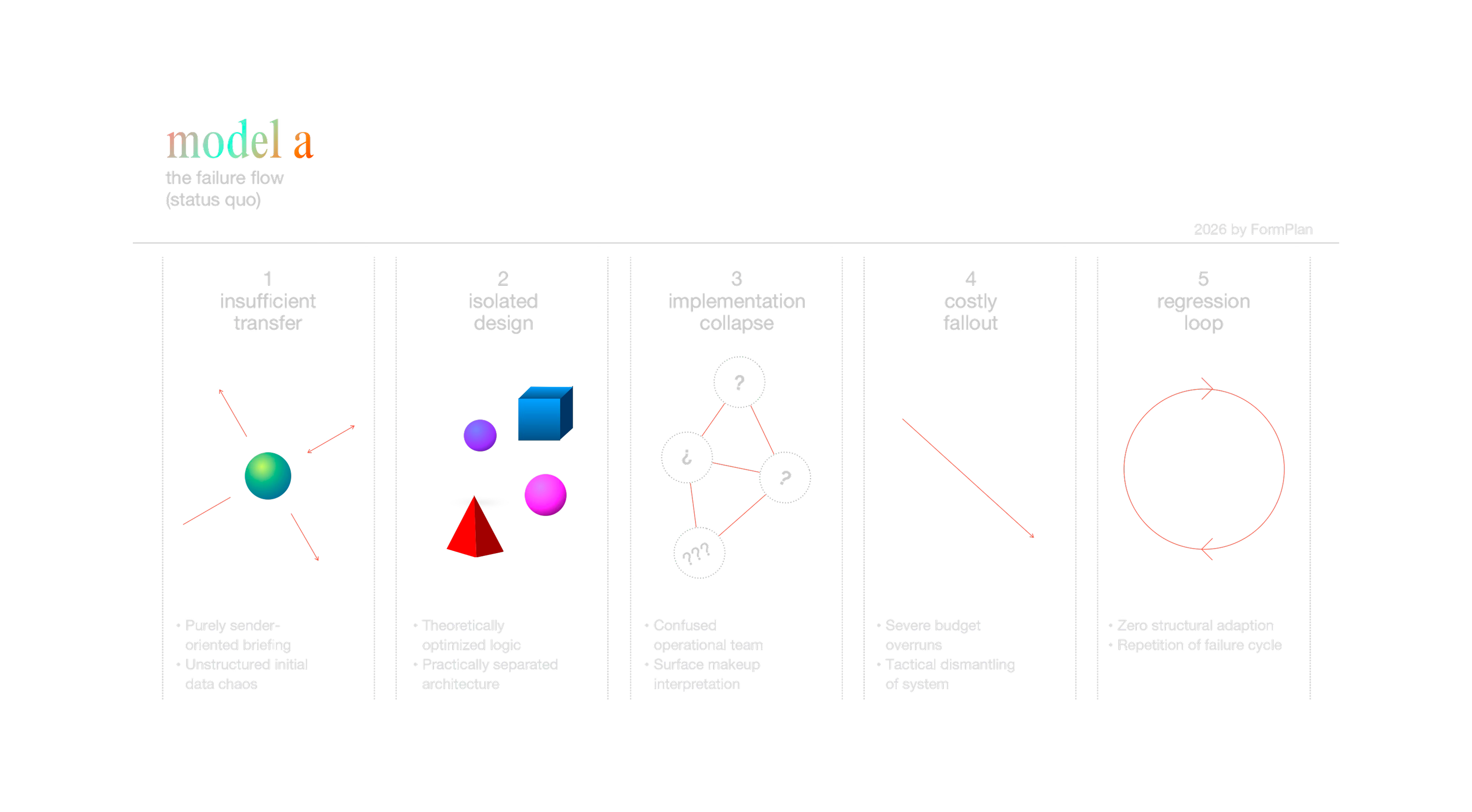
most agencies get trapped selling aesthetics. they treat strategy as a decorative afterthought. the reality is far uglier: an organization’s internal system is designed to reject anything that threatens the status quo. legacy workflows, office politics, and the inevitable "we’ve always done it this way" mindset act as a filter. good strategy doesn't fail because the idea was weak—it fails because the execution was left to an operational team that wasn't incentivized to see it succeed.
you cannot manage this friction from the outside. If you aren't the one holding the internal mandate—acting as the system controller—you are just a vendor waiting to be blamed for the failure of the system you were hired to fix.
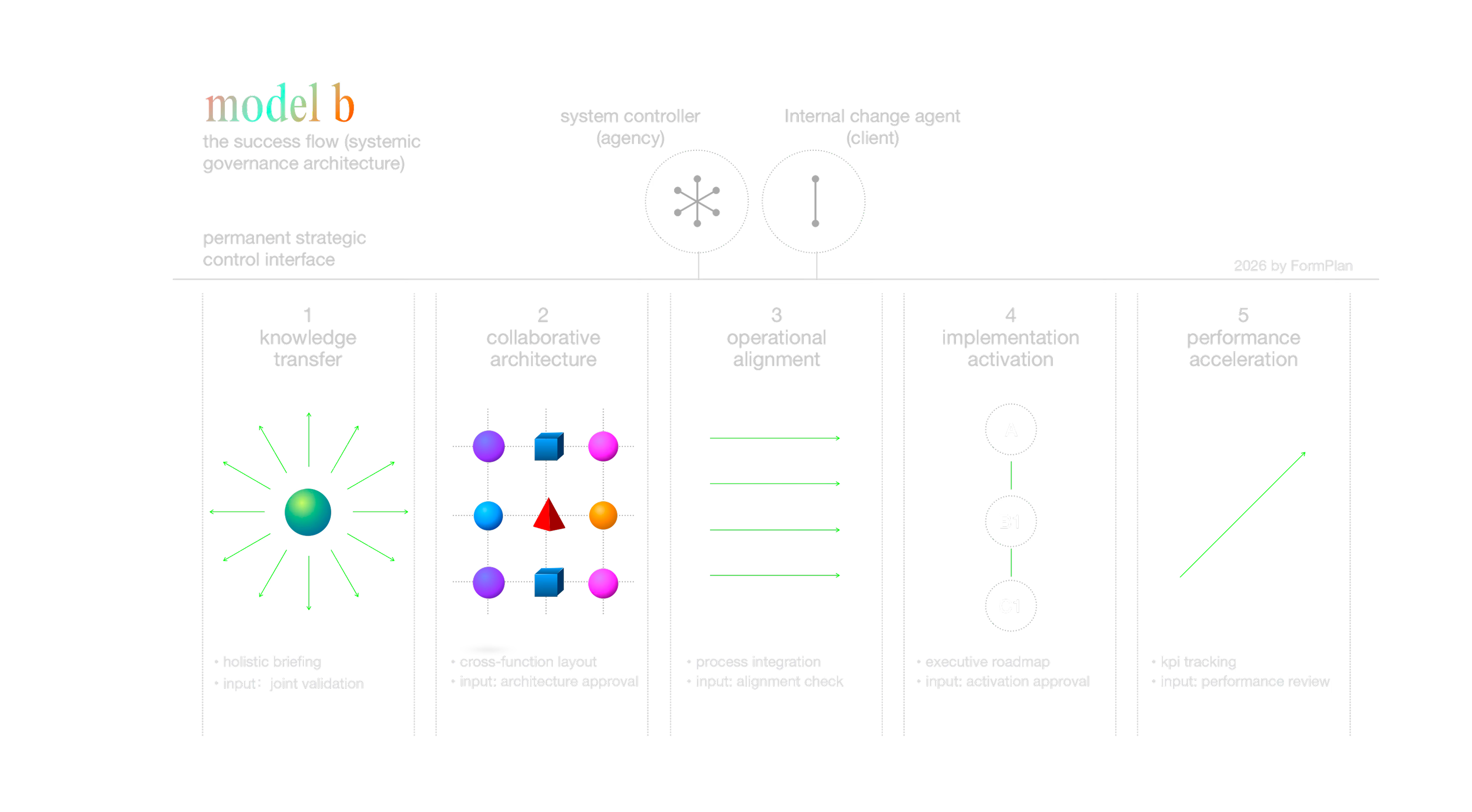
if you want sustained value creation, you have to force the organization through a strictly governed 6-stage architecture:

1 knowledge transfer
map the multi-dimensional data chaos through holistic, joint-validated briefings.
2 collaborative architecture
build a cross-functional systems layout that binds silos together.
3 operational alignment
integrate processes to secure role clarity and alignment check.
4 implementation activation
move from strategy to tactical execution via an executive roadmap.
5 performance acceleration
drive kpi-tracking and continuous optimization through performance reviews.
the mandate is clear:
without a qualified change agent on the client side to guarantee compliance across every layer, system collapse isn't a risk—it's a mathematical certainty.
lock the system,
or remain invisible.




text, photos: darius gondor
illustrations: xiuxiu chen
most agencies get trapped selling aesthetics. they treat strategy as a decorative afterthought. the reality is far uglier: an organization’s internal system is designed to reject anything that threatens the status quo. legacy workflows, office politics, and the inevitable "we’ve always done it this way" mindset act as a filter. good strategy doesn't fail because the idea was weak—it fails because the execution was left to an operational team that wasn't incentivized to see it succeed.
you cannot manage this friction from the outside. If you aren't the one holding the internal mandate—acting as the system controller—you are just a vendor waiting to be blamed for the failure of the system you were hired to fix.
if you want sustained value creation, you have to force the organization through a strictly governed 6-stage architecture:
1 knowledge transfer
map the multi-dimensional data chaos through holistic, joint-validated briefings.
2 collaborative architecture
build a cross-functional systems layout that binds silos together.
3 operational alignment
integrate processes to secure role clarity and alignment check.
4 implementation activation
move from strategy to tactical execution via an executive roadmap.
5 performance acceleration
drive kpi-tracking and continuous optimization through performance reviews.
the mandate is clear:
without a qualified change agent on the client side to guarantee compliance across every layer, system collapse isn't a risk—it's a mathematical certainty.
lock the system,
or remain invisible.

spatial & cultural systems
spatial & cultural systems